

Chestnut Veneered MDF
If you have ever priced solid timber and then looked at your budget again, you already understand the problem. Chestnut veneered MDF gives you that timber look without the same cost pressure. It delivers real wood character in a format that behaves, cuts clean and stays consistent across the whole project.
What is chestnut veneered MDF?
Chestnut veneered MDF is a board with a real chestnut wood surface and an MDF core. The outside looks like natural timber. The inner core stays stable and easy to work with.
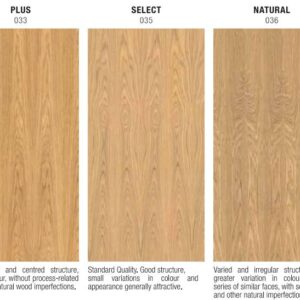
The top layer is natural wood, not a print. It shows real grain and takes varnish or stain well. You can match the tone to your project. The core stays flat and consistent, which makes cutting, routing and sanding more predictable than working with solid timber.
Most boards use a crown cut veneer. Sheets are usually 2440 x 1220mm, with common thicknesses like 6mm and 19mm. The core is standard MDF to BS EN622-5, supplied as a non structural board for interior use. Edges are square, and the faces are veneered on both sides in A/B grade, so you get a clean front and a consistent reverse.
It also meets low formaldehyde standards such as E1 and E05, with CARB2 compliance. That keeps it suitable for interior spaces.
What is chestnut veneered MDF used for?
Chestnut veneer MDF is used across projects where the finish matters just as much as the build. It works well for built-in wardrobes with flush doors and full height panels where the grain needs to run clean from one section to the next.
In kitchens, it often shows up on end panels and island cladding. It adds warmth without pushing the cost into solid timber territory. The same idea carries into living rooms, where it is used for floating shelves, media wall units and feature panels behind beds.
Smaller pieces benefit from it too. Headboards, bedside cabinets and home office desks all gain a more refined look without becoming harder to produce. Wall mounted storage and alcove shelving in period homes is another common use, especially where consistency across multiple panels is important.
It also fits naturally into transitional spaces. Think hallway console units, staircase side panels or under-stairs storage fronts. Areas where edges stay visible, and finish quality cannot slip.
On the commercial side, it is often used for reception desks, retail shelving, café wall panelling and counter fronts. Exhibition display panels and framed wall sections in open plan spaces are also typical. Anywhere that needs to look consistent, controlled and well finished.
It is also a practical upgrade for cabinet carcasses where edges are exposed. And for custom joinery, it becomes even more useful. Especially when multiple sheets need to match, and the final result has to feel cohesive from every angle.
Benefits of chestnut MDF
- Real wood surface with natural grain
- Consistent colour across panels
- Stable and reliable during cutting and machining
- Cleaner edges than solid timber
- Takes varnish and stain well
- Easier to work with on site
- More cost effective than solid wood
- Less movement over time
- Suitable for precise joinery and detailed work
- Delivers a premium look without added complexity
Why choose our chestnut veneered MDF?
At Sheet Materials Wholesale, we keep that side straightforward. You get good prices that still make sense at volume, with clear bulk and volume pricing from the start. If your order grows, pallet deals and trade discounts are already built in, so you are not recalculating everything mid-project.
We hold UK stock that is ready to move, not something you have to wait weeks for. That means you can plan properly and keep work moving instead of chasing deliveries.
Delivery is designed around real jobs as well. We offer fast UK delivery with order tracking, so you know exactly when your boards will arrive. Whether it is site or residential delivery, the process stays simple and predictable.
FAQ
Where to buy chestnut veneered MDF?
You can order it directly from Sheet Materials Wholesale online. Everything is in one place, easy to check and simple to order.
Is chestnut veneered MDF real wood?
The surface is real chestnut wood, yes. The core is MDF, so you get the look of timber without the usual movement.
Can chestnut MDF be painted or stained?
It can be stained or varnished easily. Painting is possible, but it would cover the natural grain, which is usually the whole point.
Does chestnut veneered MDF need sealing?
Yes, it’s best to seal it with varnish or oil. That protects the surface and brings out the grain at the same time.
Showing all 2 results
-
Buy in Bulk & Save
25-49 50+ £121.70£146.04 £115.29£138.35 

19mm Chestnut Veneered MDF 2 Sides Crown Cut 2440mm x 1220mm (8′ x 4′)
Layers of brown undertones and a distinct, straight and spiral pattern give it an elegant natural beauty. A strong material bearing the remarkable stability of medium-density fibreboard, Chestnut Veneered MDF is an affordable alternative to solid wood. The board is easy to cut and finish, making it perfect for cabinetry, furniture, wall paneling and decorative interior frames and finishes.
£128.10£153.72 Ex VATInc VAT Add to cart -
6mm Chestnut Veneered MDF 2 Sides Crown Cut 2440mm x 1220mm (8′ x 4′)
Layers of brown undertones and a distinct, straight and spiral pattern give it an elegant natural beauty. A strong material bearing the remarkable stability of medium-density fibreboard, Chestnut Veneered MDF is an affordable alternative to solid wood. The board is easy to cut and finish, making it perfect for cabinetry, furniture, wall paneling and decorative interior frames and finishes.
£46.29£55.55 Ex VATInc VAT Get restock alert