Our specialist stores
Our specialist stores




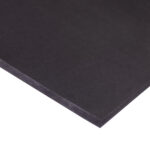
MDF Black
Medium-density fibreboards are the most reliably machinable and paint-ready product for interior joinery and commercial fit-out.
Crafted from wood fibres, resin, and wax pressed under heat, MDF is uniformly dense, consistently finished, and easy to fabricate, a valuable quality for builders, carpenters, and fit-out crews.
What is MDF?
The initials stand for Medium Density Fibreboard. It is an engineered wood sheet product that consists of refined wood fibres that are mixed with wax and resin and pressed under immense pressure and temperature to form flat panels. It is used in various applications such as building material and production of furniture.
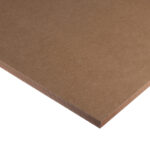
Often, many people confuse MDF board with plywood, but MDF wood is effortless to use with industrial machinery and comes with a smooth surface, and that’s why it is suitable for applying surface paint and finishes.
Generally, it is an excellent sheet material; cost-effective, robust and versatile. We often interact with it at work (shop fittings, construction products, furniture), or home (shelving, kitchens, bathrooms, etc.).
Types of MDF board
Standard MDF
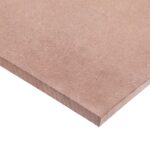
Standard MDF is the way to go for structural interior applications where moisture exposure is minimal. With a density hovering around 700 to 750 kg/m³, it is easy to machine for precise work in shelving, carcasses, skirtings, and internal framing.
The smooth and knot-free face is perfect for priming and painting. Just ensure to seal the edges, which remain absorbent.
Moisture-resistant MDF (MR MDF)
In humid places, such as kitchens, bathrooms, or utility rooms, MR MDF upgrades the standard version. It has moisture-repellent resin, which gives it a greenish tinge, reducing swelling in damp conditions.
However, it is not waterproof and has to be sealed on cut edges. Machining, strength, and finish characteristics match standard MDF, with a slight premium.
Fire-retardant MDF (FR MDF)
In public, institutional, or commercial buildings where fire codes apply, FR MDF is engineered to slow flame spread. It is treated with chemical additives and usually has a red or pink core for quick identification.
It cuts and finishes like standard MDF, though it will need flame retardant paint to maintain the rating over time, and is perfect for doors, partitions, ceilings, and walls.
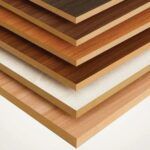
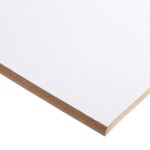
Melamine-faced MDF
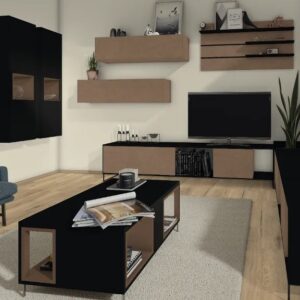
When you need furniture-grade boards off the shelf, melamine-faced MDF is the answer. It is already finished with a melamine surface, often woodgrain or white, and does not require painting.
It is rigid, ready to install, and works nicely in office, wardrobes, kitchen carcasses, and more. The edge requires some sanding to retain the clean appearance when cut.
Veneered MDF
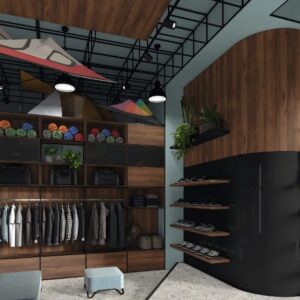
To get that solid wood feel and look without sacrificing stability, check out veneered MDF. It looks like a real-wood veneer, such as oak or walnut, over a standard MDF core. This provides superior surface quality for premium furniture, counters, doors, and other aesthetic applications.
After fabrication, the surface can be oiled or lacquered just like solid timber for added longevity.
Flexible (Bendy) MDF
The uniqueness of curved joinery is yours if you know about flexible MDF, sometimes called bendy or grooved-back MDF. Grooves, cut at the factory, allow the board to bend along one axis without creasing.
After shaping and finishing, the grooves are covered up with paint or facing. This type of MDF is widely seen in curved panels, arches, contoured furniture pieces, and so on.
Acoustic MDF
When you need the noise to stay out, you need Acoustic MDF to step in. The panels are perforated at the factory or slotted and paired with insulation backing to absorb or diffuse ambient noise. These boards are excellent for use in theatres, studios, offices, cinemas, and any other setting where acoustic intervention matters.
Bead and butt MDF
Bead and Butt, also called the Richmond profile, features evenly spaced, rounded beads, separated by flat rails. You get that classic, shaker-inspired look that imitates traditional wainscoting without the cost and complexity of real wood.
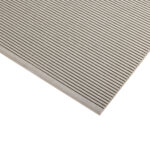
V-grooved MDF
The V-Grooved panels have a distinctive and crisp V-shaped cut that can form both horizontal and vertical patterns. The profile looks more modern and geometric, while still introducing depth and shadow lines.
Large MDF Boards
For projects that call for fewer joins or CNC detailing, oversized MDF boards (for example, 3050mm x 1220mm or larger) reduce waste and improve workflow. They’re heavy during handling, but save time when cutting large spans or continuous panels.
Why buyers choose our MDF
Flawless finish and machinability
Our MDF is sanded smooth and consistent with virtually no voids, grain, or knots. It is perfect for veneering, routing, painting, and other customisations, delivering a premium finish every time.
Dimensionally stable and versatile
MDF is built to be dead flat, holding its shape under humidity changes when sealed. It is best suited for precise interior applications like worktops, mouldings, cabinetry, etc.
Cost-effective compared to alternatives
MDF is often more affordable and reliable than plywood, especially for projects using paint-grade or veneered surfaces. Our trade pricing and volume discounts mean even better value for larger orders.
Trade and DIY friendly
Our customers rate us highly on Trustpilot and Review io for clear communication, fast delivery, and reliable services. They also mention how well the materials worked for their projects.
Tips for choosing and working with MDF
Machine with care– It is recommended to use solid carbide or PCD cutters at normal speeds. Finish pilot-drilling the screw holes to avoid edge splitting.
Health considerations– Control dust aggressively, as it contains formaldehyde and adhesive particles that could irritate your respiratory system. Use a LEV system, an FFP3 mask with an organic vapour filter and a HEPA vacuum for safety.
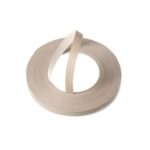
Seal all surfaces– The edges and cutouts, especially, can release formaldehyde emissions and allow moisture to enter. We have MDF edging tape that you can use to mitigate this.
Know your standards– Look for European E1/E0 or CARB Phase 2, ULEF/NAF variants certification to ensure low VOC emissions.
Common uses of MDF board
MDF board is used in several home and professional projects, including;
- Furniture
- Flooring
- Doors and windows frames
- Shelving
- Cabinets
- Wainscoting
- Decorative projects
- Tradeshow booths and theatre set construction
- Speaker boxes etc.
Pros of MDF
- Generally inexpensive compared to wood or plywood
- It doesn’t have splinters or voids, so it provides consistent surface
- Its smooth surface makes it possible to paint
- Effortless to cut using band saw, jigsaw, screw saw with no tearing out or splinting
Cons
- It is vulnerable to moisture, so it swells if exposed to water.
- It is very heavy compared to plywood
- Since it soaks up the stain, it cannot be stained.
- Doesn’t have wood grains for beauty like wood.
- Since it is made of small particles, doesn’t hold the screws perfectly.
- It contains urea-formaldehyde so one should be careful when cutting it to avoid inhaling the particles.
At Sheet Materials Wholesale, you can purchase MDF at low wholesale prices with fast nationwide delivery for most of items within 1-3 working days across the UK. Next-day delivery is also available on most orders. Competitive rates guaranteed.
FAQ
Can you paint MDF?
Yes, MDF takes paint well, but you should use primer, and preferably one that’s solvent-based or shellac-based, to seal the edges and surfaces. It prevents the MDF from absorbing too much moisture and delivers a durable finish.
How is MDF made?
MDF is made by breaking down hardwood or softwood residuals into wood fibres. The fibres are then combined with wax and a resin binder and pressed under high temperatures to create dense, uniform boards that are ideal for furniture and construction applications.
What is MDF made from?
MDF is the product of wood fibres, commonly from softwoods, that are combined with resin and wax. They are then compressed and heated to form solid panels.
What is MDF used for?
MDF is commonly used in furniture, shelving, cabinetry, wall panelling, moulding, and other applications. It’s valued for its smooth surface, which takes paint and veneer nicely, and its stability, which prevents cracking or warping, compared to solid wood.
Is MDF sustainable?
MDF can be considered somewhat sustainable, given that it is made from recycled wood fibres and wood waste. However, depending on the manufacturer, the product may use adhesives that contain formaldehyde, a potential pollutant. Eco-friendlier options with low-emission ingredients are available, but recycling MDF can be challenging. Check for certified products (e.g., FSC-certified MDF) to be sure.
MDF Range

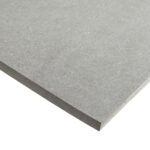
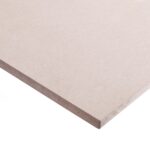
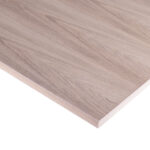
-
Buy in Bulk & Save
6-11 12+ £206.27£247.52 £202.02£242.42 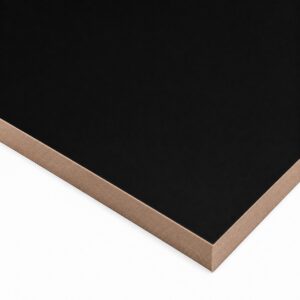 Available in 3-5 days
19mm Egger U999 PM Black Lacquered Melamine Faced MDF 2800 x 2070mm
19mm EGGER PerfectSense Matt Lacquered U999 PM Black is a melamine faced MDF panel with a smooth, durable lacquered melamine finish on both sides. Ideal for furniture, cabinets and interior fit out projects.
£212.65£255.18 Ex VATInc VAT Add to cart -
19mm Egger U999 PG Black Lacquered Melamine Faced MDF 2800 x 2070mm
19mm EGGER PerfectSense Gloss Lacquered U999 PG Black is a melamine faced MDF panel with a smooth, durable lacquered melamine finish on both sides. Ideal for furniture, cabinets and interior fit out projects.
£206.51£247.81 Ex VATInc VAT Add to cart -
Buy in Bulk & Save
6-11 12+ £218.59£262.31 £214.08£256.90 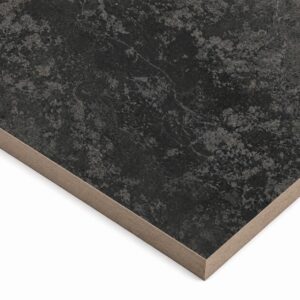 Available in 3-5 days
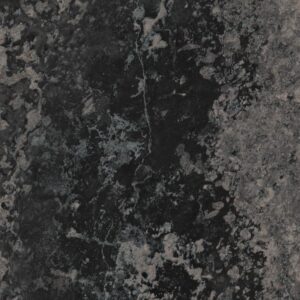
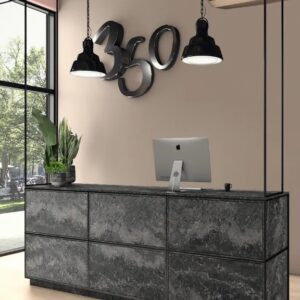
19mm Egger F128 PA Black Ambiance Granite Lacquered Melamine Faced MDF 2800 x 2070mm
19mm EGGER PerfectSense Gloss/Matt Ambiance Lacquered F128 PA Black Ambiance Granite is a melamine faced MDF panel with a smooth, durable lacquered melamine finish on both sides. Ideal for furniture, cabinets and interior fit out projects.
£225.35£270.42 Ex VATInc VAT Add to cart