Our specialist stores
Our specialist stores




Cement & Non-Combustible Boards
When a job involves fire safety, it is not the place to experiment. Cement and non-combustible boards are used for a reason. From fire rated panels to tile backer systems, they stay stable, handle heat and give you a reliable base for walls, floors and tiled areas. This guide walks you through their purpose and where they are most effective.
What are cement and non-combustible boards
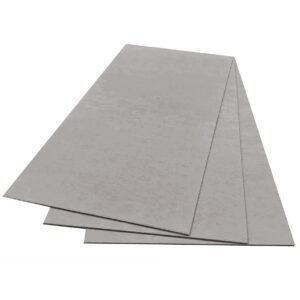
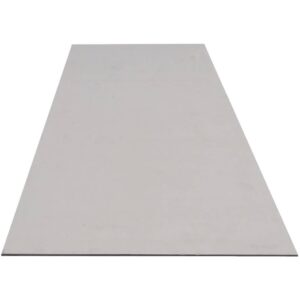
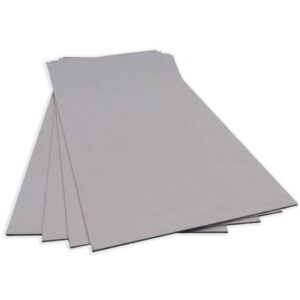
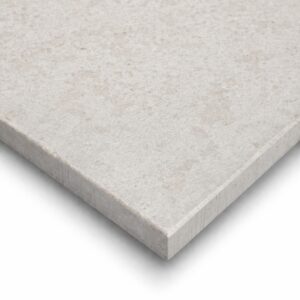
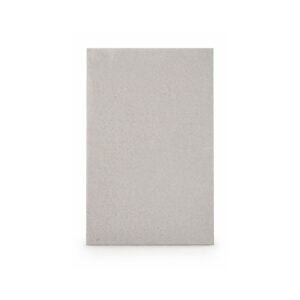
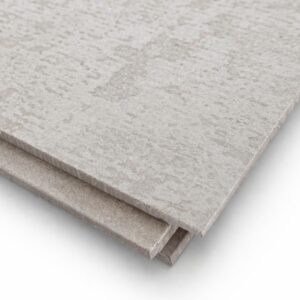
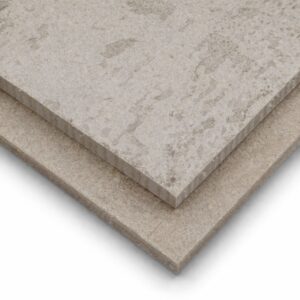
Cement and non-combustible boards are solid construction panels designed for strength, stability and controlled fire performance. They are made by combining cement with mineral components and reinforcing fibres. This creates a dense and durable material that holds its structure under pressure, heat and moisture.
These boards come in thicknesses from 6mm to 22mm. Sheet sizes such as 1200 x 600mm, 1200 x 800mm, 2400 x 1200mm, and 2440 x 1220mm fit standard UK layouts and cutting plans easily.
This category includes boards with different fire ratings. Cement fibre and calcium silicate boards often achieve Euroclass A1 under EN 13501, while cement-coated XPS boards we keep in stock are typically rated Euroclass E. As well as fire performance, many of these boards handle moisture well and are suitable for interior use. Some are also used in controlled exterior applications when properly finished.
From a working perspective, they are designed to keep installation straightforward. Most boards come with a smooth surface and square edges. Some systems also offer tongue and groove profiles. They can be painted, plastered, or, where stated, can also be tiled directly.
What are cement and non-combustible boards used for?
In many UK buildings, they are specified for fire rated wall linings, internal partitions and protected zones such as stairwells, escape routes, service risers and plant rooms. These are areas where materials need to perform consistently without adding risk or uncertainty.
They are also widely used in structural and envelope systems. You will often see them as external sheathing in framed construction, as part of façade build ups, or as a base for render systems on modern housing developments. In these applications, stability and resistance to weather exposure become just as important as fire performance.
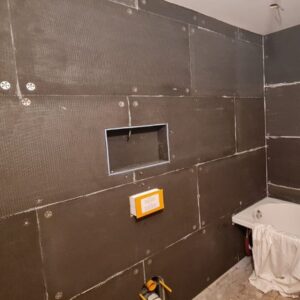
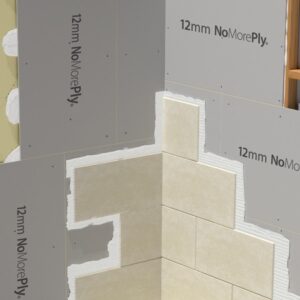
Bathrooms, kitchens and utility rooms regularly use them as tile backer surfaces or as part of wet room construction. They also work well in kitchen splashback zones and flooring build ups where a solid, moisture resistant base helps finishes last longer.
Technical and service areas are another key use. Non combustible boards are widely specified in lift shafts, plant rooms, boiler enclosures and other high risk zones where materials must remain stable under heat, load and continuous use. In these environments, reliability and fire performance are just as important as ease of installation.
In design led and commercial spaces, these boards support durable interior solutions without complicating installation. They are used in shop fit projects, hospitality interiors and acoustic wall systems when combined with insulation. In more specialised cases, they are also specified around fireplaces, where a non-combustible board helps create a controlled and safe surrounding.
Types of cement and non-combustible boards
Cement fibre board is the most widely used option in this category. It combines strength, moisture resistance and dependable fire performance. This supports use in wall linings and flooring systems. It is also suitable for general construction where a stable and durable base is needed.
Calcium silicate board is designed for more demanding environments where higher temperature resistance and long term stability are essential. It maintains its structure under heat and is often specified where fire performance is a central requirement.
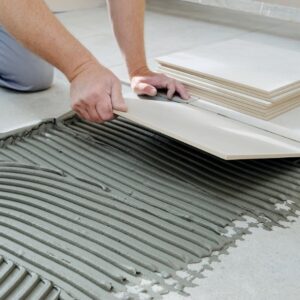
Tile backer board is developed specifically for tiled areas. It provides a stable and moisture resistant surface that helps reduce movement behind finishes and supports a clean, lasting result in bathrooms, kitchens and wet rooms.
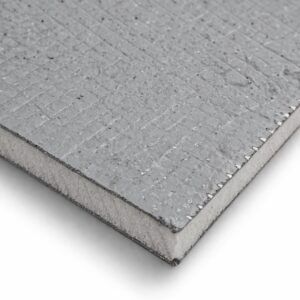
cement-coated XPS board offers a lighter and more practical solution for installation while still delivering moisture resistance and a ready to tile surface. It is often chosen where speed, ease of handling and thermal performance also need to be considered.
Why choose our cement and non-combustible boards?
At Sheet Materials Wholesale, you can choose from No More Ply and Ramco Industries UK cement board ranges, including fibre cement boards, calcium silicate boards, tile backer boards and cement-coated XPS boards.
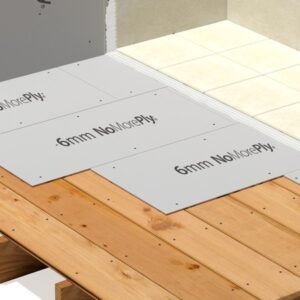
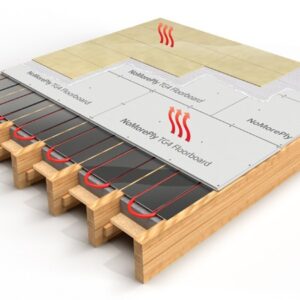
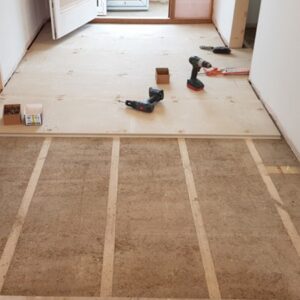
The range also includes tongue and groove fibre cement floorboards, designed for faster fitting on timber subfloors and suitable for wet rooms, bathrooms, hallways and mezzanine levels.
Some cement boards are designed mainly for wet areas, while other non combustible boards are intended for fire rated construction. For wet areas, the right board helps reduce movement behind tiles and gives the finish a more stable base.
Some systems may still require tanking, waterproof joint treatment or manufacturer approved accessories, especially in showers and full wet rooms. This is why it is important to choose the right cement board or non combustible board as part of the full installation system, not just by thickness or price.
Many boards in this category can be fixed to timber or metal framing, while floorboards and TG4 options are designed for stronger flooring build ups. Correct screws, fixing centres, board spacing and movement gaps should always follow the product guidance, especially where the board will be tiled, plastered, rendered or used near heat.
The range also supports different site requirements, from tile backing and bathroom refurbishment to wall partitions, floors, cavity closures, plant rooms and fireplace surrounds. A dedicated overboard option is also available for laying directly over existing timber floors before tiling. It prevents tile and grout line cracking and is highly moisture resistant and non-combustible.
Competitive trade pricing, bulk order support and UK delivery are available across the range, with next-day delivery options on many products.
FAQ
Where to buy cement and non-combustible boards?
You can order them online from Sheet Materials Wholesale.
What are cement and non-combustible boards used for?
You’ll usually see them in places where you need something strong and dependable. Walls, floors, and technical areas. They also work really well as a base before tiling or finishing.
Are cement and non-combustible boards suitable for bathrooms and kitchens?
Yes, they work well in both. They handle moisture better than standard boards and give you a solid base for tiles.
Cement & Non-Combustible Boards Range
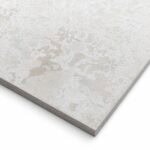
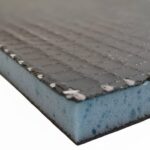
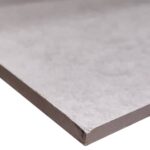
Showing all 17
Products in Cement & Non-Combustible Boards
-
Buy in Bulk & Save
36-71 72+ £23.04£27.65 £21.83£26.20 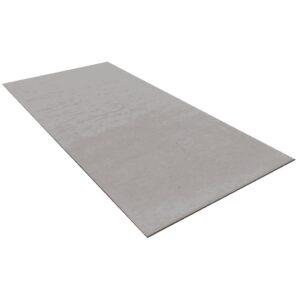

6mm Ramco Fibre Cement Board A1 Non-Combustible 2440 x 1220mm (8′ x 4′)
6mm Ramco Hicem fire rated board 6mm is a technically advanced, multi-functional board, which contains so called cellulose fibres and additives. 6mm Hicem A1 Non-Combustible board provides an environmentally friendly and fire-safe high performing alternative to regular plywood, OSB or wood.
£24.25£29.10 Ex VATInc VAT Add to cart -
Buy in Bulk & Save
48-95 96+ £24.91£29.89 £23.60£28.32 6mm Ramco Calcium Silicate Board A1 Non-Combustible 2440 x 1220mm (8′ x 4′)
6mm Ramco Hilux fire rated board is a technically advanced, multi-functional board, which contains so called siliceous and calcareous materials, reinforced with cellulose fibres. 6mm Hilux A1 Non-Combustible board provides an environmentally friendly and fire-safe high performing alternative to regular plywood, OSB or wood.
£26.22£31.46 Ex VATInc VAT Add to cart -
Buy in Bulk & Save
32-64 65+ £27.47£32.96 £26.90£32.28 
6mm NoMorePly Fibre Cement Board A1 Non-Combustible 2400 x 1200mm (8′ x 4′)
NoMorePly 6mm Fibre Cement board is commonly used in tile backing, walls, floors and cavity closures. It is a very high strength board with excellent water resistant properties making it suitable to use in areas where its damp.
£28.32£33.98 Ex VATInc VAT Add to cart -
Buy in Bulk & Save
75-149 150+ £8.52£10.22 £8.07£9.68 There are 1 more images6mm NoMorePly PrePrimed Fibre Cement Tile Backer Overboard 1200 x 600mm (4′ x 2′)
NoMorePly Primed 6mm Fibre Cement overboard has been manufactured to make timber floors stronger before tiling. 6mm overboard prevents tiles and grout line cracking and is highly water resistant and non combustible.
£8.97£10.76 Ex VATInc VAT Add to cart -
Buy in Bulk & Save
25-49 50+ £10.14£12.17 £9.93£11.92 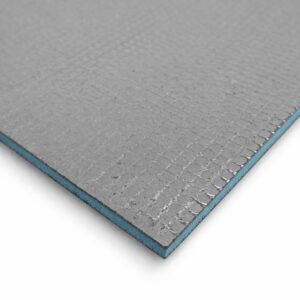 There are 1 more images
6mm NoMorePly Cement Coated XPS Board 1200 x 600mm (4′ x 2′)
6mm NoMorePly Cement Coated XPS Board is the perfect choice for your tile backing system. It can be used in timber and metal walls and solid floors. They are reinforced and 100% moisture resistant, making them ideal to use in kitchens, bathrooms, and wetrooms.
£10.45£12.54 Ex VATInc VAT Add to cart -
Buy in Bulk & Save
24-47 48+ £34.10£40.92 £32.30£38.76 9mm Ramco Fibre Cement Board A1 Non-Combustible 2440 x 1220mm (8′ x 4′)
9mm Ramco Hicem fire rated board 9mm is a technically advanced, multi-functional board, which contains so called cellulose fibres and additives. 9mm Hicem A1 Non-Combustible board provides an environmentally friendly and fire-safe high performing alternative to regular plywood, OSB or wood.
£35.89£43.07 Ex VATInc VAT Add to cart -
Buy in Bulk & Save
25-49 50+ £42.19£50.63 £41.32£49.58 There are 1 more images9mm NoMorePly Fibre Cement Board A1 Non-Combustible 2400 x 1200mm (8′ x 4′)
NoMorePly 9mm Fibre Cement board is commonly used in tile backing, stove backer board, walls, floors and cavity closures. It is a very high strength board with excellent water resistant properties making it suitable to use in areas where its damp.
£43.49£52.19 Ex VATInc VAT Add to cart -
Buy in Bulk & Save
27-54 55+ £42.85£51.42 £40.60£48.72 10mm Ramco Calcium Silicate Board A1 Non-Combustible 2440 x 1220mm (8′ x 4′)
10mm Ramco Hilux fire rated board is a technically advanced, multi-functional board, which contains so called siliceous and calcareous materials, reinforced with cellulose fibres. 10mm Hilux A1 Non-Combustible board provides an environmentally friendly and fire-safe high performing alternative to regular plywood, OSB or wood.
£45.11£54.13 Ex VATInc VAT Add to cart -
Buy in Bulk & Save
18-35 36+ £46.58£55.90 £45.14£54.17 12mm Ramco Fibre Cement Board A1 Non-Combustible 2440 x 1220mm (8′ x 4′)
12mm Ramco Hicem fire rated board 12mm is a technically advanced, multi-functional board, which contains so called cellulose fibres and additives. 12mm Hicem A1 Non-Combustible board provides an environmentally friendly and fire-safe high performing alternative to regular plywood, OSB or wood.
£48.02£57.62 Ex VATInc VAT Add to cart -
Buy in Bulk & Save
24-47 48+ £50.50£60.60 £48.94£58.73 12mm Ramco Calcium Silicate Board A1 Non-Combustible 2440 x 1220mm (8′ x 4′)
12mm Ramco Hilux fire rated board is a technically advanced, multi-functional board, which contains so called siliceous and calcareous materials, reinforced with cellulose fibres. 12mm Hilux A1 Non-Combustible board provides an environmentally friendly and fire-safe high performing alternative to regular plywood, OSB or wood.
£52.06£62.47 Ex VATInc VAT Add to cart -
Buy in Bulk & Save
17-34 35+ £43.88£52.66 £42.98£51.58 There are 1 more images12mm NoMorePly Fibre Cement Board A1 Non-Combustible 2400 x 1200mm (8′ x 4′)
NoMorePly 12mm Fibre Cement board is commonly used in tile backing, stove backer board, walls, floors and cavity closures. 12mm NMP fibre cement board is Hetas approved. It is a very high strength board with excellent water resistant properties making it suitable to use in areas where its damp.
£45.24£54.29 Ex VATInc VAT Add to cart -
Buy in Bulk & Save
32-74 75+ £12.33£14.80 £11.68£14.02 Available in 5-7 daysThere are 1 more images12mm NoMorePly Fibre Cement Tile Backer Wallboard 1200 x 800mm (4′ x 2.6′)
NoMorePly Primed 12mm Fibre Cement Wallboard has been manufactured to provide a strong wall surface before tiling. 12mm NoMorePly wallboard is Hetas approved and prevents tiles and grout line cracking and is highly water resistant and non combustible.
£12.98£15.58 Ex VATInc VAT Add to cart -
Buy in Bulk & Save
25-49 50+ £11.11£13.33 £10.88£13.06 There are 1 more images12.5mm NoMorePly Cement Coated XPS Board 1200 x 600mm (4′ x 2′)
12.5mm NoMorePly Cement Coated XPS Board is the perfect choice for your tile backing system. It can be used in timber and metal walls and solid floors. They are reinforced and 100% moisture resistant, making them ideal to use in kitchens, bathrooms, and wetrooms.
£11.45£13.74 Ex VATInc VAT Add to cart -
Buy in Bulk & Save
17-34 35+ £62.84£75.41 £59.54£71.45 16mm Ramco Calcium Silicate Board A1 Non-Combustible 2440 x 1220mm (8′ x 4′)
16mm Ramco Hilux fire rated board is a technically advanced, multi-functional board, which contains so called siliceous and calcareous materials, reinforced with cellulose fibres. 16mm Hilux A1 Non-Combustible board provides an environmentally friendly and fire-safe high performing alternative to regular plywood, OSB or wood.
£66.15£79.38 Ex VATInc VAT Add to cart -
Buy in Bulk & Save
12-23 24+ £73.01£87.61 £69.17£83.00 18mm Ramco Fibre Cement Board A1 Non-Combustible 2440 x 1220mm (8′ x 4′)
18mm Ramco Hicem fire rated board 18mm is a technically advanced, multi-functional board, which contains so called cellulose fibres and additives. 18mm Hicem A1 Non-Combustible board provides an environmentally friendly and fire-safe high performing alternative to regular plywood, OSB or wood.
£76.85£92.22 Ex VATInc VAT Add to cart -
Buy in Bulk & Save
25-49 50+ £28.08£33.70 £27.50£33.00 There are 4 more images18mm NoMorePly Fibre Cement Tile Backer TG4 Floorboard 1200 x 600mm (4′ x 2′)
NoMorePly Primed 18mm Fibre Cement TG4 Floorboard has been manufactured for an easy and quick fit that interlock together. 18mm NoMorePly floorboard won’t loose its shape, won’t squeak and has outstanding weather durability that allows boards to stay exposed for longer before installation. Suitable for Wet rooms, bathrooms, hallways, kitchens and even mezzanine flooring.
£28.95£34.74 Ex VATInc VAT Add to cart -
Buy in Bulk & Save
20-39 40+ £33.56£40.27 £32.87£39.44 There are 4 more images22mm NoMorePly Fibre Cement Tile Backer TG4 Floorboard 1200 x 600mm (4′ x 2′)
NoMorePly Primed 22mm Fibre Cement TG4 Floorboard has been manufactured for an easy and quick fit that interlock together. 22mm NoMorePly floorboard won’t loose its shape, won’t squeak and has outstanding weather durability that allows boards to stay exposed for longer before installation. Suitable for Wet rooms, bathrooms, hallways, kitchens and even mezzanine flooring.
£34.60£41.52 Ex VATInc VAT Add to cart